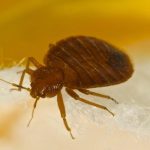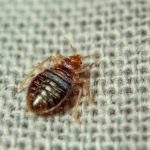
Bed bug problems in schools are becoming more common. While an actual classroom infestation is unlikely, bedbugs are known to hitchhike their way to the classroom through the clothing of students and their belongings. If a bed bug is found on a student, this likely means that there is an issue or infestation at home (although it may have transferred from another student).

If a bed bug is found on a student, immediate removal is essential, while maintaining the emotions of the student. Remove the child discreetly from the classroom and remove all bugs for identification. Contact a parent or guardian and maintain the same isolation you would with a lice infestation.

If beg bugs are noticed in the classroom, never allow an untrained individual to apply pesticides. Untrained individuals include principals and teachers. Contacting a licensed pest control company such as Poulin’s will ensure that your infestation is eradicated following all rules and laws of the schools board and local legislation.

If you suspect a child has an infestation at home, voice your concerns to the parents. Be sure to emphasize on the fact that bedbugs know no socioeconomic class and have nothing to do with how clean a home is. These faulty beliefs hinder parents in admitting and fixing an infestation. Parents can be asked to store a child’s “next day” clothing and lunchboxes/backpack in plastic Ziploc bags until the bedbug infestation is eliminated in the home. Providing them with the bags will ensure that they are used.

Above all, never share the specifics on an infestation with other students or parents unless they need to know. Providing anonymity gives parents the assurance that others will report problems in the future without embarrassment or hesitation.

Posted in Bed Bugs | Tagged , , , , , , | Leave a comment

Once you have decided on eliminating your bed bug problem with a heat treatment, the preparations must begin. Your items will be heated to a temperature of 120 degrees for a specified length of time. In order to prevent any mishaps and to ensure optimal heat treatment results, there are a few steps homeowners can take.

(1) Before treatment remove items such as pets (including fish) aquariums, plants, any food that is left out, fruits, vegetables, spices, herbs, prescriptions and makeup. Any items that are wax based such as candles will leave a waxy mess if left in the vicinity of heat treatments. Also, be sure to remove paintings, photos and heirloom jewelry. Have a professional pest control expert inspect theses items to be sure they don’t need to be treated.

(2) MOST IMPORTANTLY, remove any flammable items or items under pressure. This includes some cleaning supplies, hairspray, aerosol cans and any item that has a fire risk.

(3) Any clothing or bed linens removed from the contaminated space after treatment must be washed on the hottest water setting and dried on the hottest drier setting. Delicate items can be placed in a plastic bag and in the freezer for 48 hours.

(4) Clothing and linens that are left in the treated space should be stored in a way that air can circulated effectively (Such as an open-weave laundry basket).

(5) Bed bugs can contaminate electronics. Be sure to turn all electronics off and disconnect from the wall outlet.

(6) Your home will be extra hot when you return. You may use air conditioning or open a window to assist in the cooling process.

Posted in Bed Bugs | Tagged , , , , , , | Leave a comment

Winnipeg Free Press – PRINT EDITION
By: Jen Skerritt
Posted: 01/5/2012 1:00 AM

Lincoln Poulin, general manager of Poulin’s Pest Control Services, said his company has seen a 15 per cent increase in calls regarding skunk and raccoon removals in the last year. He said he thinks the increase is due to a jump in the population and the fact new housing developments have attracted the wildlife.

He said skunks have been removed from new housing developments along Lagimodiere Boulevard and areas close to the Brady Road Landfill. Poulin said skunks typically like to burrow under low-lying decks, front steps or garden sheds.

He said his company has removed raccoons from attics and chimneys, where they have caused a considerable amount of damage, including in one St. Vital home where siding and insulation had to be taken off to remove raccoon babies.

Poulin said the wildlife population could become an even bigger problem next spring if the mild winter temperatures continue.


Read the full article

Posted in In The News | Tagged , , , , , | Leave a comment

Bed bugs are small insects that live in dark spaces (typically the crevices of mattresses) and feed at night. Since DDT (a pesticide used on bedbugs) has been banned, bed bugs have been resurging in the past few years. Travel, vacations and even hospital stays can result in an infestation brought home, to your bed.

Since bed bugs can carry almost 30 different human pathogens, this problem, occasionally unnoticed, is vital to eliminate. With most pesticides banned, alternative treatments are becoming popular, especially heat treatments – known as Thermal Remediation. Some pesticides require up to three different treatments to even put a dent in bed bug infestations, but one treatment of heat can eliminate the entire population.

Heat Eradication Chart
Bed Bug Adults             113° F / 45° C for 15 minutes
Bed Bug Eggs                113° F / 45° C for 60 minutes
Bed Bugs, in general    115° F / 46° C for 7 minutes

Bed bugs are sensitive to temperatures above 45 degrees Celsius and are killed by high temperatures. When applying heat in any form, a gradual increase in temperature is suggested since bed bugs will end up scattering and increasing your infestation. Heat treatments are done by releasing super-heated air to the targeted area, then circulated throughout the infected room. Before treatments, be sure to protect items that that are sensitive to heat, including materials that are not heat-resistant.

Posted in Bed Bugs | Tagged , , , , , , , | Leave a comment

Poulin’s Pest Control is excited to showcase our premiere rodent prevention tool – The Excluder. This easy to use product eliminates opening for rodent preventions. Watch our video below to see how this product can help you with rodent control in Vancouver, Surrey, Langley, Richmond, Burnaby and Winnipeg.

Posted in Rodents | Tagged , , , , , , , , | Leave a comment

Catching and eliminating mice is a common concern for homeowners. While the best option is a guaranteed professional extermination, there are a few do-it-yourself remedies for eliminating a few mice in your home. If you are not the squeamish sort and have a small mice population, mousetraps may be a suitable initial remedy.

Aside from mouse poison, there are 4 different types of traps used to eliminate a mouse problem:

(1) Snap Traps
Snap traps are inexpensive and the oldest trap-type on the market. They are semi-reliable and not as “humane” as other traps. A spring-loaded snap is triggered by a mouse, which ends up killing it via its neck. The drawbacks are that they do not always kill the mouse and can sometimes simply injure the mouse.

(2) Electronic Traps
Electronic traps are the most expensive type of trap and easy to use. These traps kill mice by electrocution. You can simply insert the bait and turn on the voltage. Upsides to this type of trap is disposing of the mouse is as easy as dumping into the trash and you are never face-to-face with the dead mouse.

(3) Multiple Catch Traps
Multiple catch traps are pricier than snap and glue traps, but can be reused and catch more than one mouse at a time. This method can hold up to 30 mice and is used for a catch and release method, rather than a killing method.

(4) Glue Traps
Glue traps are inexpensive and non-reusable. They are simple, but have their drawbacks. The main drawback is that they kill a mouse by starvation or stress, which can be a slow and sometimes noisy process.

If your mouse problem is overwhelming, or you end up discovering that you are by far NOT a pest control expert, contact us for an appointment to rid your home of mice.

Posted in Rodents | Tagged , , , , , , | Leave a comment

Mice can produce between 6 and 10 litters a year which consists of 5 to 10 pups. That means after two months of age, a mouse will produce up to 100 offspring a year. The have a life expectancy of only 18 months.

Their teeth never stop growing and the use their claws to destroy materials softer than their teeth.

Mice can jump up to 12 feet down and 13 feet across. They use their whiskers to sense depth and temperature.

Mice visit their food sources between 20 and 30 times a night. They prefer grains and seeds and typically stay within 25 feet of their nest.

They cannot see well, but their sense of smell and touch is supreme.

They can squeak at a frequency that humans cannot hear.

Mice tails, which are as long as their body, have scales that help with climbing.

Mice enemies consist of buzzards, owls, mice, weasels, cats, traps poisons and humans.

There are many different types of mice including Grasshopper mice, North African mice, House mice, Pygmy mice, Field mice, Stripped Field mice, Meadow Jumping mice and Mexican Volcano mice

These fascinating rodents can easily become a pest in any habitat. Found in walls, attics, shrubbery and even foundation, the task of eradicating them is daunting to homeowners. Poulin’s is your best choice for eliminating your home or workplace of mice.

To assist in the process, be sure to follow a few simple steps.

  • Clean food spills immediately.
  • Never stack your lumber or wood near your home.
  • Check all door brush shields and weather stripping.
  • Cover all air conditioning vents with mesh screens.
  • Remove garbage daily.
  • Close any gaps in walls, floors, windows and ceilings.
Posted in Rodents | Tagged , , , , , | Leave a comment

Mice are known for their sneakiness, which is a trait that accurately describes their personalities, living habits and eating habits. Mice make living quarters out of boxes, attics and commonly, interior walls. When mice have entered the interior walls of your home, they then become extremely difficult to exterminate. This difficulty is due to them not leaving their nests during the daylight hours.

There are ways to entice a mouse to leave your walls, which typically includes using a food source. After you get them out, then you have numerous options to complete the extermination.

Mouse Traps
A traditional mousetrap can be placed near the food source. Some mice are smarter than others and will avoid a trap especially if they witness another mouse being trapped.

Glue Traps
Glue traps are beneficial in that they can catch two mice at once. The drawback is you will hear a mouse struggling and even crying since they end up dying slowly of starvation using glue traps.

Poison
Mouse poison can be purchased at any supermarket or home improvement store. While poison is typically effective, households with domestic animals or small children are warned against using poison.

Call the Professionals
Mice breed frequently and their populations can grow exponentially. Often, you will discover that your infestation is larger than you can handle. In this case, call in the Poulin’s pros to eradicate your home from mice.

Posted in Rodents | Tagged , , , , , , , | Leave a comment

House mice are one of the most troublesome and cost-draining pests. They are cunning and sneaky and can find a million ways to infiltrate your home. This video provides tips to mouse proof your home for the changing seasons.

Posted in Rodents | Tagged , , , , , , , | Leave a comment

Mouse or rodent-proofing your home includes the garage, attics, basements and other neglected areas. A mouse can fit through a hole the size of a pencil, which puts your garage at the highest risk. A garage door is bound to have gaps between the door and the ground, so taking a few precautions and preventative measures in your garage can keep the mice from staying and establishing a permanent residence.

(1) Never leave your garage door open for extended periods, especially overnight. This is not only a safety precaution against crime and theft, but also allows night-active pests easy access to your garage, pipes, water heaters, and every box you may have in your garage.

(2) Those large 50-pound bags of dog food save money and are a requirement for anyone who owns a pet. Leaving them in the garage is like leaving a welcome sign for mice. It is a large food supply protected by a thin piece of paper. Mice will certainly invade, eat and even use the paper for building a comfortable nest in your garage. This rule includes birdseed, cat food, grass seed and anything else a mouse may mistake for food.

(3) I would hope that most residents have moved their garbage outside considering the heat waves across Canada, but for those who haven’t, spare yourself the stench of garbage and a mouse infestation and move it outdoors.

(4) Be sure to clean up even the smallest of spills immediately. This includes accidents from pets, children, single crumbs or anything else a cunning mouse will use for food.

(5) When de-cluttering the garage, never keep firewood or lawn clippings in your garage.

(6) Store all boxes at least 18 inches off the ground. Installing shelves will not only protect your home from rodents, reptiles, and insects, but will also give you back your garage for what it was intended for, storing cars.

Posted in Rodents | Tagged , , , , , , , , | 1 Comment